PRODUCT OF ITALY ⬥ IMPORTED BY RICCIARDELLA IMPORTS LLC

Ricciardella Imports was founded on a simple belief: the finest foods of Italy deserve to be enjoyed in America exactly as they are at home... authentic, traceable, and uncompromising.
Ricciardella Imports grew out of an Italian heritage and a lifelong passion for the food of those roots. What began as pride in the flavors of home became a commitment: to bring genuinely high-quality Italian goods to the United States, sourced directly from the people who make them.
It's a father-and-son business. Gianfranco Ricciardella was born in a small town in Puglia, and his son Joseph grew up on those flavors an ocean away. A trip back there is where it truly started and where a long-standing friendship became something more. Giuseppe Berardi, a family friend of many years, is a high-end chef whose life's work is built on relationships with the region's local producers and food artisans. Giuseppe knows where the best of Puglia comes from, and who makes it.
Through Giuseppe, the Ricciardellas were introduced to the Rubino family, three generations of organic growers in the hills of Palo del Colle and Turi, the producers of San Domenico olive oil. One taste made the decision.
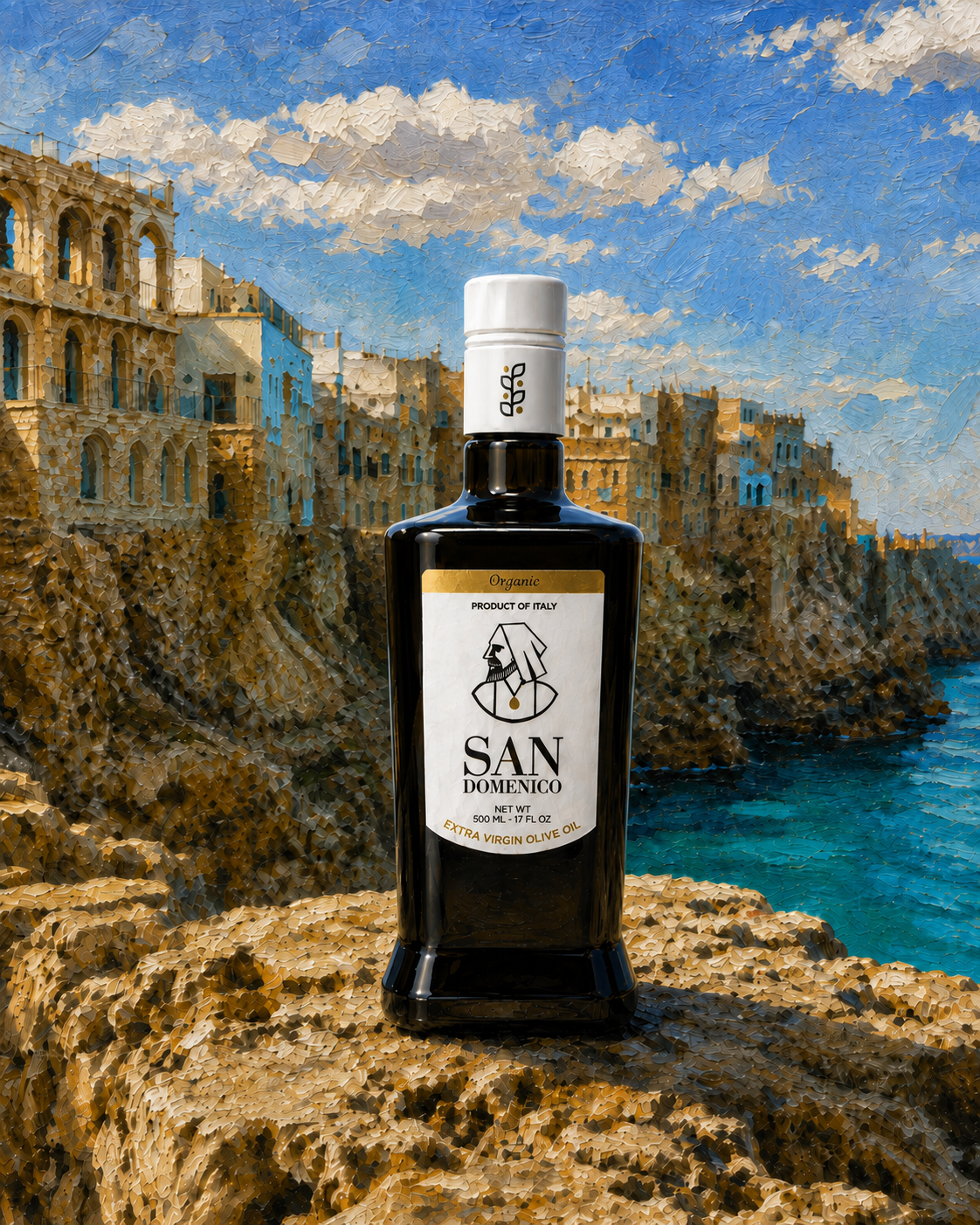
Great olive oil cannot be manufactured — it has to be grown. San Domenico begins in the
sun-baked hills of Puglia, Italy's most storied olive-growing region, and is finished with
a discipline few producers match.
Puglia produces more olive oil than any other region of Italy. Around Palo del Colle and Turi, intense southern sun, mineral-rich soil, and centuries-old growing tradition stress the olive in exactly the way that concentrates flavor and character. The ground here is thin red earth over limestone, holding little water and forcing roots deep to find it. A tree under that strain puts its energy into fruit rather than growth.
Coratina takes its name from Corato, a short drive from the Rubino groves, and it's the reason this oil measures the way it does.The cultivar carries some of the highest polyphenol levels of any olive grown in the world. The remaining fifth is Ogliarola Barese, the softer native olive of the Bari countryside, which rounds Coratina's edge without dulling it.
Early harvest costs yield. Green olives give up less oil than ripe ones, but they carry far more of what matters. The same Coratina picked weeks later loses roughly half its polyphenols. The Rubino family harvests early and cold-extracts every batch within 12 hours, preserving the freshness and aroma that slower industrial processes lose.
Every bottle labeled “extra virgin” meets the same legal minimum. What separates one from another is the phenolic fraction: the antioxidant compounds the olive builds in the grove and the mill either preserves or destroys.
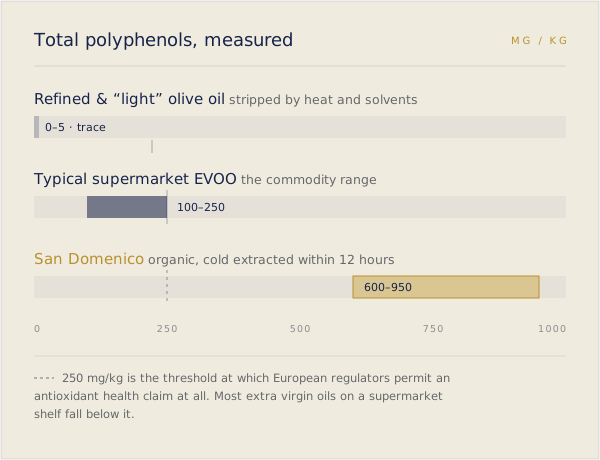
Hydroxytyrosol and its derivatives carry the one health claim European regulators have authorized for olive oil: they contribute to protecting blood lipids from oxidative stress. An oil needs 250 mg/kg to make it. San Domenico clears that several times over
The catch at the back of the throat is oleocanthal, found only in high-phenolic oils and under active study for anti-inflammatory activity. That research is promising rather than settled but the sting itself is a signal of phenolic content that cannot be faked.
Before any polyphenol, olive oil is roughly three-quarters monounsaturated fat. U.S. regulators recognize supportive, though not conclusive, evidence that oils high in oleic acid may reduce the risk of coronary heart disease, when they replace fats higher in saturated fat.
The amount both European and U.S. authorities reference when describing these effects — the practical dose behind the research. Best poured raw over vegetables, beans, fish, or bread, where nothing is lost to heat.
A note on the science. Polyphenol counts vary by harvest, cultivar, and analytical method; San Domenico’s range reflects certified testing across harvests. The antioxidant claim above is authorized under EU Regulation 432/2012 for oils containing at least 5 mg of hydroxytyrosol and its derivatives per 20 g. The oleic acid statement reflects an FDA qualified health claim, supported by limited evidence and not by significant scientific agreement. These statements have not been evaluated by the Food and Drug Administration. San Domenico olive oil is a food, not a medicine, and is not intended to diagnose, treat, cure, or prevent any disease.
.png)
.png)
We bring authentic Italian products to the United States, direct from the source.
.png)